
Dementia Friendly Municipalities
As we look toward a future with rising rates of dementia, now is the time to begin the important work of building Dementia Friendly Communities. Municipal governments can play a key role in supporting these initiatives, allowing people to age in place and actively participate in their communities for longer.
Aging in place is a priority for many, and has been argued to have significant health benefits, especially for people living with dementia. In fact, aging in place is so important it is the backbone of Nova Scotia’s health strategy around aging.
Beyond simply staying in community, people living with dementia want to remain valued members of their community. However, they can face notable barriers in their social and physical environments.
Work by municipalities to address and eliminate these barriers will benefit not just people living with dementia, but the community at large – when everyone has equitable access to community, everyone can flourish. This work aligns with Nova Scotia’s mission to become an accessible province by 2030.
The Alzheimer Society of Nova Scotia (ASNS) is here to support you in your quest to become a Dementia Friendly Municipality.
Steps to becoming a dementia friendly municipality
Given the unique makeup of every community, and the variety of people who live within them, there is no one path towards dementia friendliness. Factors such as urban or rural location, existing infrastructure, community demographics, and population size are all important to consider when working toward a dementia friendly municipality.
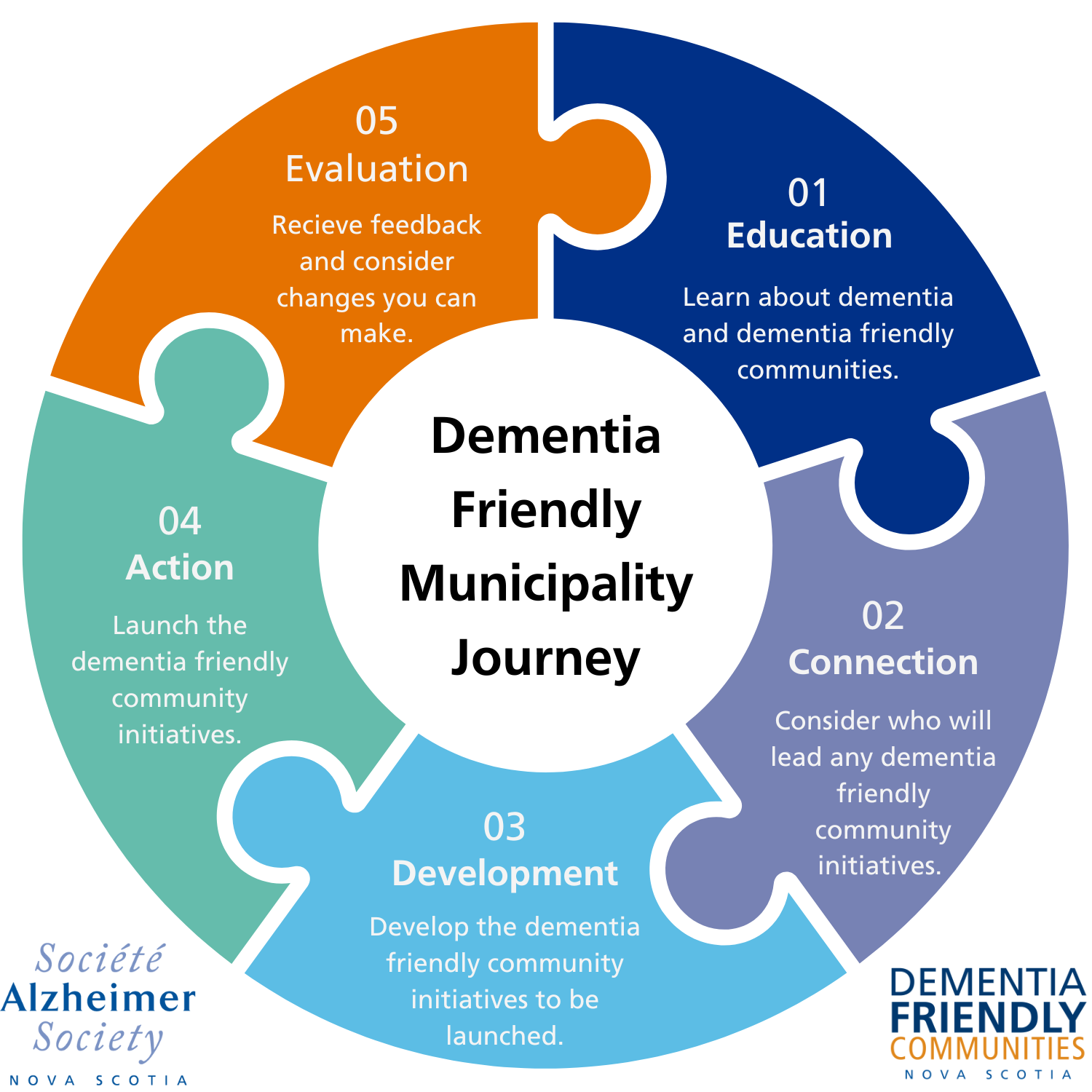
At the Alzheimer Society of Nova Scotia we’ve developed a process we call the Dementia Friendly Municipality Journey, a framework to help municipal governments to create their own unique paths to Dementia Friendliness. Samantha Morrison, our Dementia Friendly Communities Lead is happy to help guide you through this journey.
1. Education: The first step in this process is for the municipality to facilitate education and training on dementia, stigma reduction and dementia friendliness for municipal staff, elected officials, volunteers, and committee members.
The Alzheimer Society offers a variety of fantastic education opportunities, click here to learn more about the education sessions currently available.
2. Connection: Once education efforts are underway it is time to consider who within the municipal government will lead a dementia friendly community initiative. This is a great time to engage your municipal committees, specifically your accessibility, planning, and age-friendly committees. Or you may wish to establish a brand-new dementia friendly communities committee.
Whether you want to utilize one of your established committees or create a new one, it is important that you try and engage people with lived experience – people living with dementia and/or their care partners. People with lived experience are the best source of knowledge on what will make your community more accessible to people living with dementia.
3. Development: Once you have determined or established the committee responsible for your dementia friendly community initiative you will begin the work of developing the project. Consider the wants and needs of your community, as well as what can be accomplished by those working on it. This is a great time to engage with the community to find out what they see as needed. The Dementia Friendly Communities Lead is here to help as you choose and develop your Dementia Friendly Initiatives.
4. Action: Taking your work from the development stage to the action stage will look different based on what you’ve decided to pursue as your Dementia Friendly Community initiative. The Dementia Friendly Communities Lead is here to support turning those ideas into actions.
5. Evaluation: It is important to remember that building a dementia friendly community is not a one step process. Once your work is underway, and time specific programming or events have finished, it is important to gather feedback from your community – with a special focus given to the feedback of those with lived experience. Soliciting feedback will help you identify what you did (or are doing) well, what you can do better, and what does not work at all. Take the feedback you receive, make necessary changes and start the process again.
Local Government Toolkit
Our colleagues at the Alzheimer Society of British Columbia have developed this fantastic Local Government Toolkit, providing steps and practical tools local governments can take to develop a Dementia Friendly Action Plan.
To access the toolkit, click here
Keep an eye out for the Alzheimer Society of Nova Scotia - Dementia Friendly Municipalities Toolkit – currently in development.