
Alzheimer Society of BC and Yukon urges action to strengthen dementia care in BC
Learn about our recent recommendations to the Provincial Government’s Standing Committee on Finance.
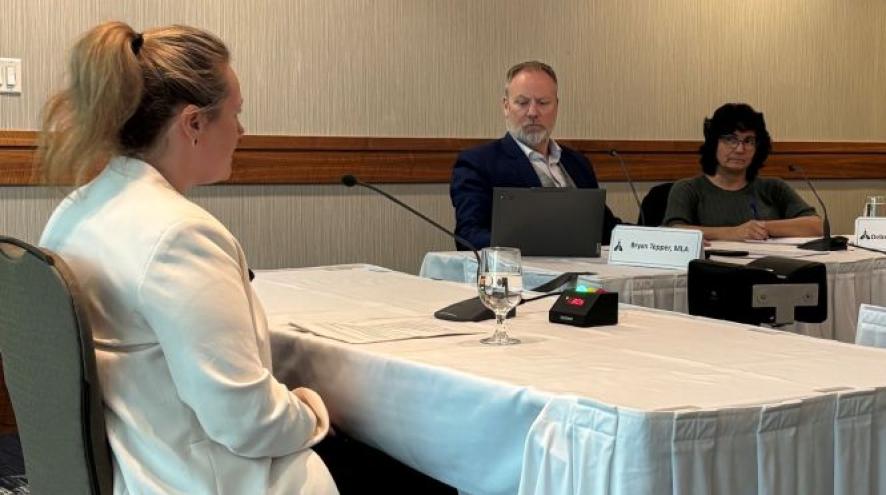
On Monday, June 8, the Alzheimer Society of BC and Yukon presented to the Select Standing Committee on Finance and Government Services as part of their consultations with the public about next year’s provincial budget. This committee, made up of BC MLAs, reviews government spending, oversees key independent offices and gathers public input each year to help shape the provincial budget. Its work is important because it gives British Columbians a direct voice in decisions that affect everyday priorities such as health care, education, housing and public services.
In our presentation to the committee, we highlighted the growing impact of dementia on BC’s health-care system and identified key areas where targeted investments can reduce this pressure and make a measurable difference.
In her remarks, Rebecca Frederick (Director, Engagement) focused on three priorities: expanding long-term care capacity, creating a clear clinical pathway for dementia and sustaining investment in First Link® Dementia support.
“Overcrowded hospitals, long wait times and strained health-care workers are pressures that are top of mind for people in BC,” Frederick says. “When the system doesn’t work for people living with dementia, the impacts show up everywhere: in emergency departments, in hospital beds and in long-term care waitlists.”
Our recommendations included:
- Investing in long-term care capacity and infrastructure, as well as assisted living, home support and community-based supports. In April, nearly 8,000 people in BC were waiting for long-term care space, while the province is currently short approximately 2,000 long-term care spaces — a gap projected to grow significantly in the coming years. We are recommending that projects cancelled in the 2026 budget be restored in the 2027 budget, alongside additional investments to meet the growing need and investments across the full continuum of care.
- Creating a clear, province-wide clinical pathway for dementia. A defined pathway, like that which exists for cancer, would help clinicians, people living with dementia and their families better understand what care and supports they can expect, while improving coordination and consistency across the health-care system.
- Providing stable, multi-year funding of $4.2 million annually for First Link®. First Link® connects people affected by dementia to information, education and support, and following a diagnosis. Last year alone, the program received almost 6,000 referrals and connected with approximately 12,500 people through more than 62,000 points of contact.
In sharing these priorities, we emphasized how dementia affects the broader health-care system. Long-term care shortages contribute to hospital congestion, while timely diagnosis, care navigation and caregiver support can help reduce unnecessary emergency visits and delay entry into long-term care.
“Dementia is not a small part of the emergency room and acute care challenge — it is central to it,” Frederick says. “And with the right investments, it can be central to the solution.”
Learn more about our advocacy priorities and send your MLA a message of support.