
Identifying feelings and working through ambiguous loss
Navigating emotions as a care partner can be complex. Identifying them isn’t always easy, but tools like a “feeling wheel” can help clarify what you’re experiencing. Read on as we explore the realities of loss and grief, common experiences for many care partners.
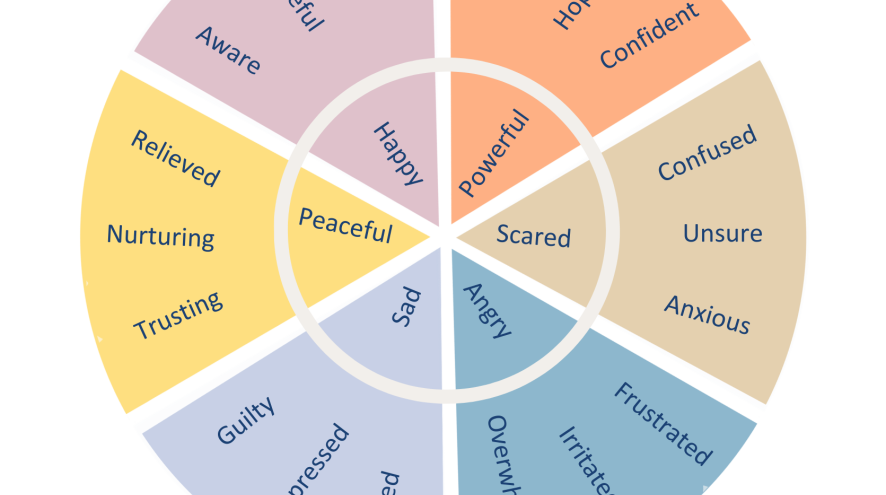
How are you feeling?
Navigating emotions as a care partner can be a complex experience.
For Martin, there’s “a numbness that cannot be explained…” Tobias mentions guilt, “thick and familiar.” Eric “cannot bear the silence of the ambiguous grief and loss.”
As a care partner, it’s common to hold back emotions or feel pressured to quickly express them and move on. However, your feelings are valuable for signalling deeper needs, so identifying your emotions can be important.
Many of us struggle to name how we feel exactly. We may not have been taught to examine our emotions in a specific way. Yet psychologists suggest that human emotions evolved to preserve our safety and health. Identifying how we feel signals what we need to live well.
There are countless words for our different emotions, and “feeling wheels” can help us identify how we are feeling. The feeling wheel shared here includes common responses to a dementia diagnosis.

To use it, start with the feelings in the middle, choose one or more that best match your emotional experience, then move to the outer ring to get more specific. You may find a word that offers a refreshing clarity to understanding and describing your experience as a care partner.
Loss and grief may be the most significant and difficult emotions care partners face. This includes:
• Lost dreams and plans for the future.
• Loss of a confidant and partner.
• Progressive losses in the life of the person living with dementia.
Another form is ambiguous loss, which emerges when a person living with dementia is physically present, but not mentally or emotionally present in the same way as before. This differs from a sudden death. When someone passes away, you often receive support from family and friends and eventually find closure. In comparison, ambiguous loss masks grief, prompting uncertainty about expressing sadness when the abilities of the person living with dementia change.
Naming your feelings and talking about them with health-care providers, staff at the Alzheimer Society of BC and Yukon or other care partners can help. You may feel less alone when someone truly listens and acknowledges your feelings. Talking with knowledgeable professionals or peers in a support group offers learning opportunities for coping and living with the many under-recognized emotional responses to dementia.
For more information on ambiguous grief, download our booklet, click here.