
Alzheimer’s Awareness Month 2026: Meet Ashley Sharma
We are recognizing Alzheimer’s Awareness Month by sharing the experiences of people like Ashley, who has found meaning, connection and joy after a dementia diagnosis, in part by connecting with the Alzheimer Society of B.C.
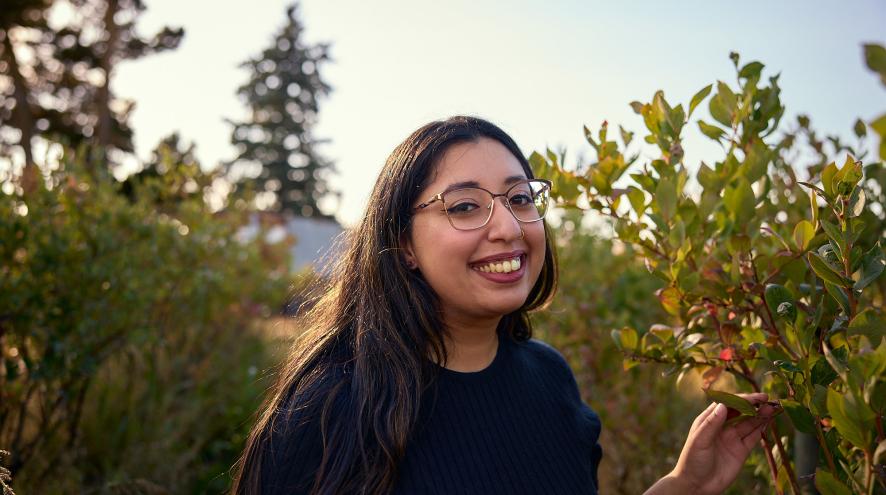
Ashley Sharma first realized her Nanni was changing when she saw her come through the door from an ordinary outing, in an unordinary way.
“She came home with a bunch of juice bottles from Subway,” Ashley says. “Like, just armfuls of juice. I remember thinking it was weird, but I brushed it off.”
That small, confusing moment was the first of many and turned out to be an early sign of dementia. It was also the start of a journey that would reshape Ashley’s life and her role within their close-knit family.
Ashley, now in her mid-twenties, grew up in Abbotsford surrounded by family. Her Nanni was the centre of it all — the matriarch, the storyteller, the problem-solver.
“If something was wrong, you went to Nanni. She just had that strength about her,” Ashley says.
When her grandmother began showing signs of confusion and frustration, conversations about what was happening didn’t come easily.
“In our household, there’s a structure,” Ashley says. “Even though I was one of the eldest grandchildren and I was in university and working, my opinion didn’t matter. The adults would hush any concerns. We didn’t talk about dementia.”
The family’s resistance to talking about dementia was rooted in fear. Ashley’s grandfather had experienced racism and mistreatment from hospitals when he first immigrated to Canada and that trauma lingered.
“For him, going to the hospital meant you might not come home,” Ashley says. “So, when Nanni started showing symptoms of dementia, the idea of taking her to a doctor felt impossible.”
When Ashley’s grandmother was hospitalized in 2020 after losing feeling on one side of her body, the family could no longer ignore her symptoms. Doctors confirmed the loss of feeling was likely caused by frontotemporal dementia. Even while lying in a hospital bed, Ashley’s Nanni remained the family’s anchor.
“She comforted me,” Ashley says. “She said, ‘Koi na maim theek haan’ — there’s nothing to worry about, I’m okay. Even in that moment, she was still being Nanni.”
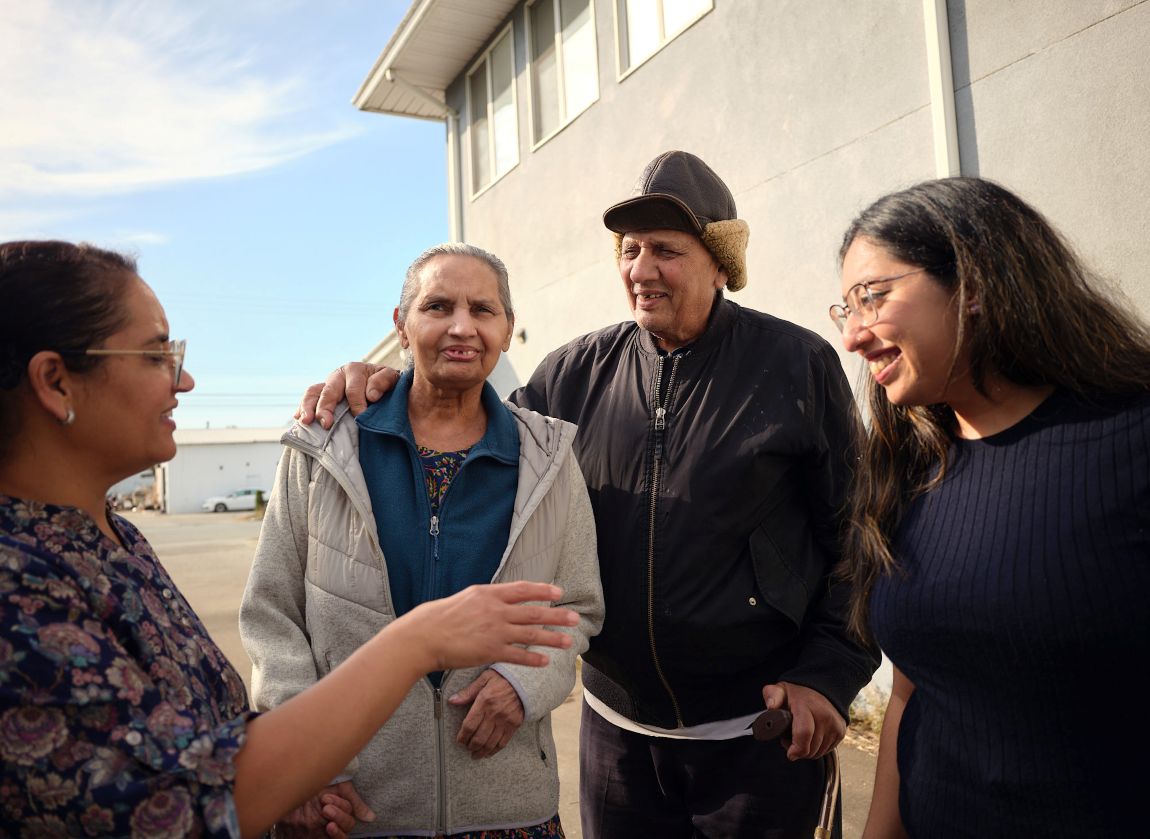
Now, a couple years into her caregiving journey, Ashley hopes to see more recognition for young caregivers like herself.
“There aren’t a lot of spaces for people my age who are caring for grandparents or parents with dementia,” she says. “Sometimes it feels like I’m living in two worlds; my friends are going out or starting new jobs and I’m home making sure my Nanni’s okay.”
Despite the challenges, Ashley wouldn’t trade the closeness she’s grown with her Nanni. The First Link® Dementia Helpline gave her tools and reassurance, but it also reminded her why she started.
“At the end of the day, I’m just trying to love my grandma and give her what is best.”
---
On Thursday, January 8th, Ashley appeared on Global News Morning BC with Support and Education Coordinator, Joti Sandhu, to talk about her family's experience with dementia.
Want to learn more? Meet some other people on the dementia journey at alzbc.org/AlzheimersAwareness.
If you have questions about dementia, call the First Link® Dementia Helpline at 1-800-936-6033.