
Alzheimer’s Awareness Month 2026: Meet Eric Li
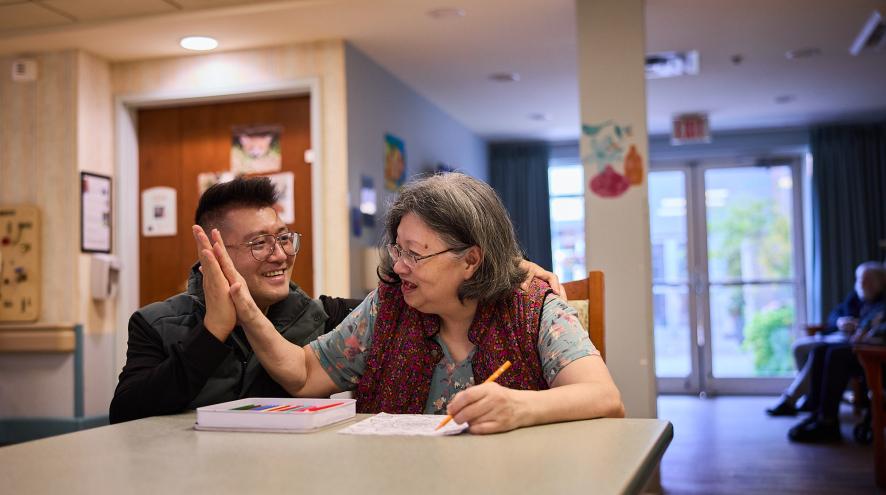
We are recognizing Alzheimer’s Awareness Month by sharing the experiences of people like Eric, who has found meaning, connection and joy after a dementia diagnosis, in part by connecting with the Alzheimer Society of B.C.
Content warning: This story contains discussions of suicide. If you need support, please call or text Crisis Centre BC for 24/7 support at 988 or visit crisiscentre.bc.ca
When Eric Li’s mother, May, was diagnosed with frontotemporal dementia (bvFTD), Eric finally had an explanation for years of erratic behaviour, which had become unmanageable. May had gotten into disagreements with her next-door neighbours over what she felt were incorrect property lines. She had frequent encounters with law enforcement – at the grocery store, for leaving with unpaid items because she assumed it operated like a food bank, and at the bank, after leaving feedback of their services in Sharpie, on their window.
“I broke down when Dr. Roger Wong told me she has dementia. I didn’t know much about the disease, but I knew it was serious and I had no idea how to help her.”
At the time, Eric was living with May in East Vancouver. After discovering the reason for his mother’s behaviour, he was able to speak with their local businesses and neighbours about the diagnosis. When May inevitably repeated the behaviours that had gotten her into trouble before, the ambulance was called, instead of the police. “Their attitudes changed, but I still felt helpless,” Eric says. “Because my mom was able to dress herself and feed herself and because I was living with her, she didn’t meet the criteria for home assistance.”
Three years before Eric’s mother was diagnosed, he was in a serious car accident and suffered a traumatic brain injury. Although he was slowly recovering, he needed the assistance of a cane to walk and experienced extreme sensitivity to light.
“Everyone thought my capability was greater than it was,” Eric says. “I started thinking that the longer I’m around, the longer it will take for my mom to get help. I was in a dark cloud and it felt like it was consuming me.”
In 2017, Eric tried to take his own life. He spent time in the hospital, was discharged, and then in 2018, attempted suicide again. During his second stay in the hospital as a psychiatric inpatient, he had a conversation with a doctor that changed everything.
“I told him why I wanted to end my life,” Eric says. “Then he told me, ‘If you’re willing to take your own life so your mother can get help, that tells me that no one can love your mom how you love your mom. You have the heart, but you don’t have the resources.’”
Eric’s doctor asked if he’d heard of the Alzheimer Society of B.C. He hadn’t, but he promised the doctor he’d call. Eric is a man of his word, but he didn’t reach out right away. After he was discharged, he tried to manage May’s care on his own. Unfortunately, their situation once again became unmanageable.
“I didn’t want to call, but I had made a promise,” Eric says. “I picked up the phone and when the staff person answered I said, ‘I don’t know why I’m calling. I was told to call this number. The voice on the other side said, ‘Tell me what’s going on.’”
Eric stayed on the phone for a long time, explaining his situation and asking all the questions he’d been holding inside. After sharing his story, he signed up for his first in-person dementia education workshop.
“One of the skills they taught us was to wait three seconds after asking a question before asking again,” Eric says. “When I got home, I tried it out. Instead of repeating myself, I counted to three in my head. Sure enough, she answered.”
Eric was thrilled to learn that he could take the same workshop as many times as he wanted and to discover more things that could help him care for his mom.
“What really amazed me is that I was never sent a bill,” Eric says. “The resources helped me become a better person and a better giver of care to my mom. When I was able to donate, I did.”
With support from the Alzheimer Society of B.C., Eric cared for his mom at home until February 22, 2022. Two is a lucky number in Chinese culture, which provided comfort to Eric. In the years leading up to the move, they’d experienced multiple dangerous events at home – everything from fires to floods – that were sparked by May’s cognitive decline. He wasn’t ready, but Eric accepted that it was time for her to move into a long-term care home. The waitlist was long, but fortunately, a case manager recognized the urgency of their situation. A room became available in a care home just a few months after making the request.
“I knew I had to do what was right for my mom, but it was hard,” Eric says. “In Chinese culture, there’s an expectation to care for your parents at home and some people will think you’re a bad child if you don’t. But I’d seen the burnt microwave and I’d seen the floods. I knew I had to do things differently.”
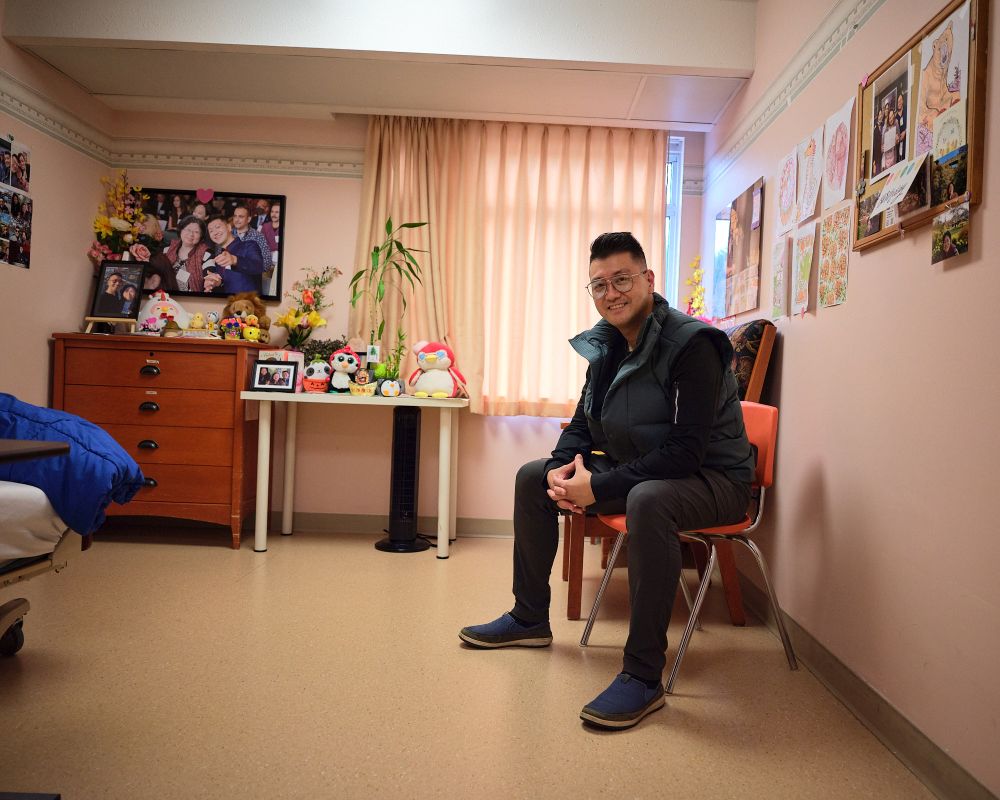
To ease the transition for his mom, Eric did all he could to make her room feel like home. He brought pillows, favourite blankets, photographs and mementos. May settled in much faster than he or the staff expected. It wasn’t long before Eric realized the advice a doctor had given him before his mother moved was true.
“He told me that the move would allow me to be more of a son, instead of a caregiver,” Eric says. “I was offended! I thought, ‘What do you mean more of a son?’ But he was right. When she was at home, I was the administrator, the fireman and at times, the tyrant. Now, I’m her son and her best friend.”

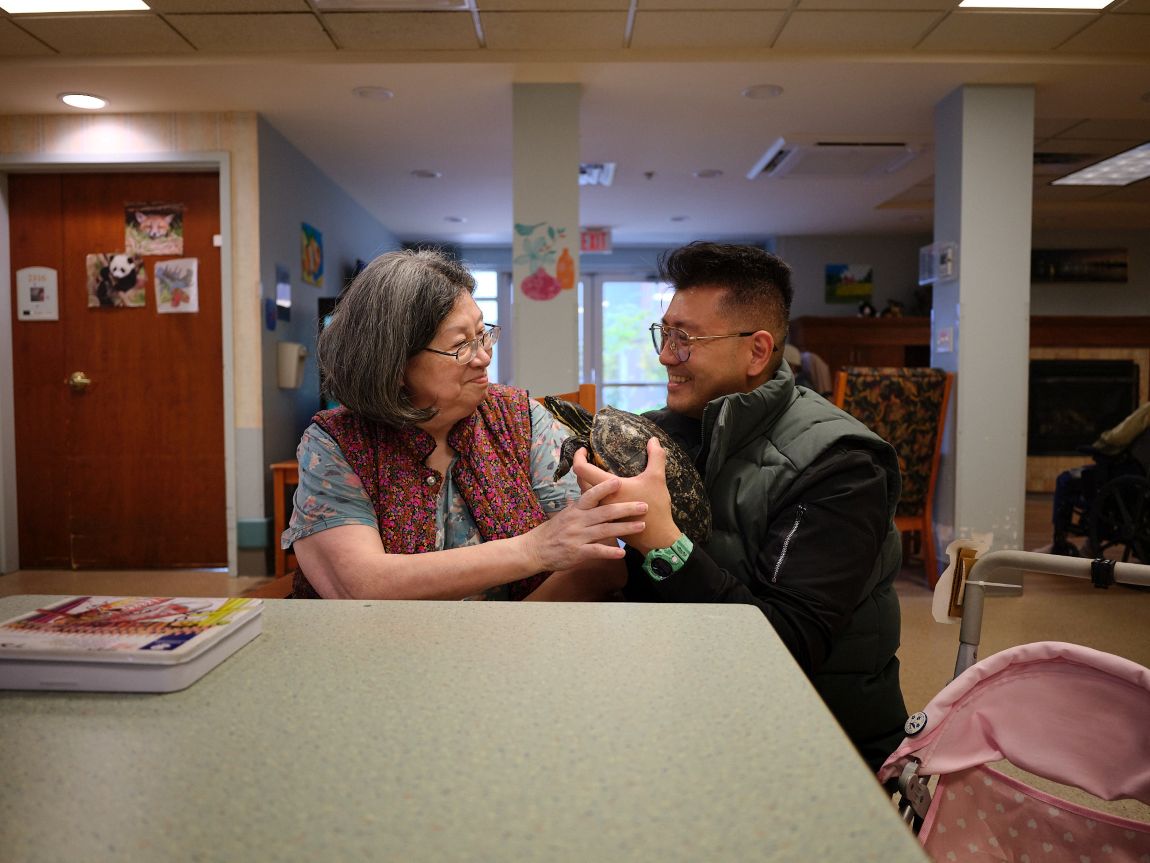
Eric visits May as often as he can and when possible, he brings Tilly, his yellow-bellied slider. Tilly the turtle has been Eric’s constant companion since he rehabilitated her nine years ago, helping her heal from several infections. He has fond memories of spending time with May and Tilly in their backyard, watching Tilly move around his mother’s feet while she worked in the garden. Eric has trained Tilly to sit peacefully in a pink stroller and she has accompanied him to several fundraising events for the Alzheimer Society of B.C.
“Tilly is a catalyst for conversations,” Eric says. “She doesn’t bark, doesn’t chirp or meow. I’ve met so many people affected by dementia because of her.”
Connecting with the Society not only gave Eric the tools he needed to help his mother, it helped him shift his perspective.
“I learned how to dance with dementia, instead of to fight with it,” Eric says. “I don’t think that would have been possible if I hadn’t made that first call to First Link®.”
---
It is with deep love and celebration of a life well lived, to share news of May Tsoi's passing. She had graduated all life lessons and departed us on January 12th, 2026. "Mama May" is cherished as she transcends her soul's higher education in heaven.
Want to learn more? Meet some other people on the dementia journey at alzbc.org/AlzheimersAwareness.
If you have questions about dementia, call the First Link® Dementia Helpline at 1-800-936-6033.